



True Story · 51 Years In The Air
I'm 81. I flew for 51 years.
And I can finally tell you our secret.
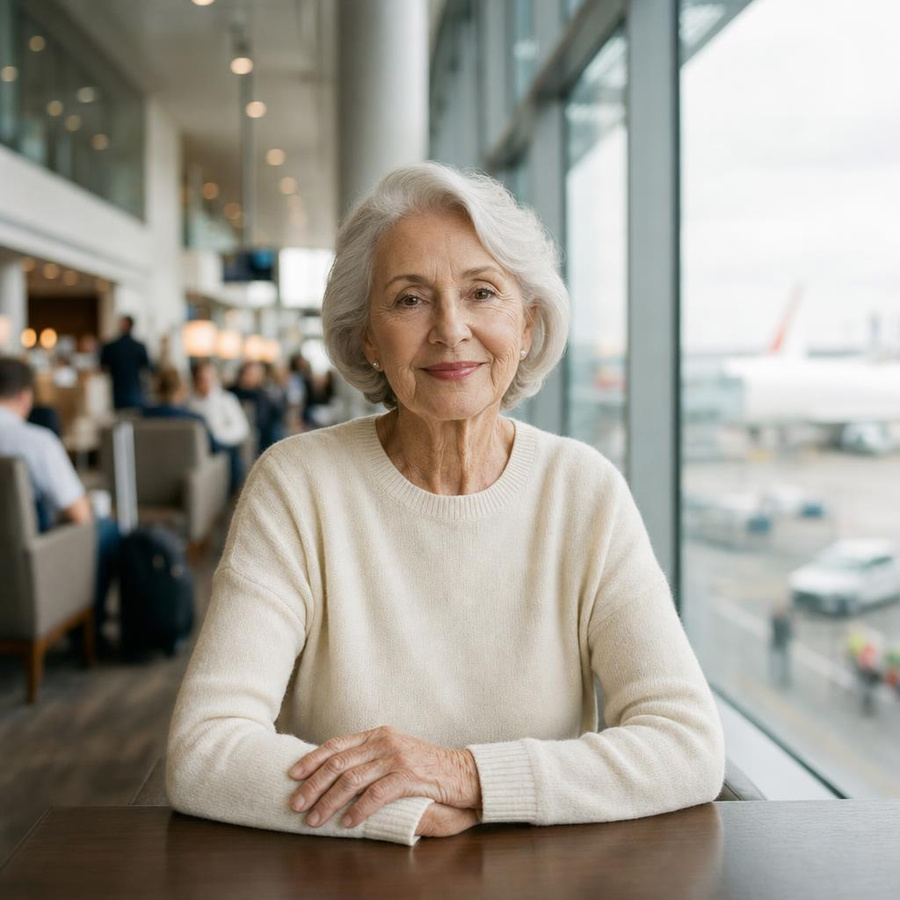
Retired flight attendant · 51 years in the air
Let me start from the beginning.
I started in 1967 when I was 22.
Pan Am hired me out of a recruitment office on Madison Avenue, and I lived in a stewardess apartment in Forest Hills with five other girls.
We had to be unmarried, under 5'9", and speak at least one foreign language. I spoke French. My friend Helen spoke Italian and Mandarin.
My first route was New York to Honolulu. Nine hours each way on a 707.
I want you to picture that cabin with me for a moment.

The men wore suits. The women wore dresses and pearls and gloves. The seats were 34 inches apart, wide enough that the man next to you wasn't touching your elbow when he reached for his drink.
The drinks started before takeoff. Cocktails on a tray, real glasses, with an olive or a twist. I knew the regulars by name from their boarding passes, and I knew what they drank before they ordered.
Dinner was beef Wellington on china with real silver. Or sole almondine with a glass of white wine. Or chicken kiev that came out perfect because the chef who designed the menu had trained in Paris.
The 747s had a piano bar on the upper deck. Eight hours into the flight, somebody's husband would walk up there and sit down and play Fly Me to the Moon while I refilled drinks at the bar. The man across the aisle would light Helen's cigarette for her at 35,000 feet.
When we landed, the bags were waiting on a brass cart on the tarmac, and the skycap took them to a town car.
Nobody paid for a checked bag. Nobody waited at a carousel. Nobody walked through a scanner.
That was what flying was.
And then something happened that nobody saw coming.
In May of 2008, American Airlines became the first U.S. airline to charge a fee for the first checked bag. Fifteen dollars.
It was a small story in the business section. Most passengers didn't even notice. Within a year, every other airline had copied them.
That single decision changed flying more than anything else in my career.
Because once airlines figured out they could charge for bags, they kept going.
The fee for the first bag went from $15 to $35. The second bag got its own fee. Then they invented an overweight charge. Then an oversize charge. Then they shrunk the weight limit so more bags qualified as overweight.
By the time I retired, the first checked bag was $60. The second was $75. An overweight bag was an extra $100. A second oversize bag international could cost you $300 before you'd even boarded.
In 2024, U.S. airlines made $7.27 billion in baggage fees alone. That number was higher than the entire industry's net profit that year.
Without your bag fees, the whole industry would have been unprofitable.
And I watched what those fees did to people from the galley.
I watched a woman cry at a counter in JFK because she couldn't afford the overweight charge on a bag full of her dead mother's clothes.
I watched a couple in Atlanta fight in front of me about which of their three bags to abandon at the curb.
I watched a businessman in Heathrow pull a four-hundred-dollar suit out of a checked bag with a long pressed crease running across the front.
I watched it for ten years.
And the whole time, I watched passengers struggle while I didn't. I didn't pay a single fee. I didn't break a wheel. I didn't wait at a carousel.
Not because I was a more experienced traveler. Not because I knew some clever packing trick. But because of the bag I was carrying.
Flight attendants of my generation had a specific bag.
I want to describe it to you, because most passengers have never seen one up close.
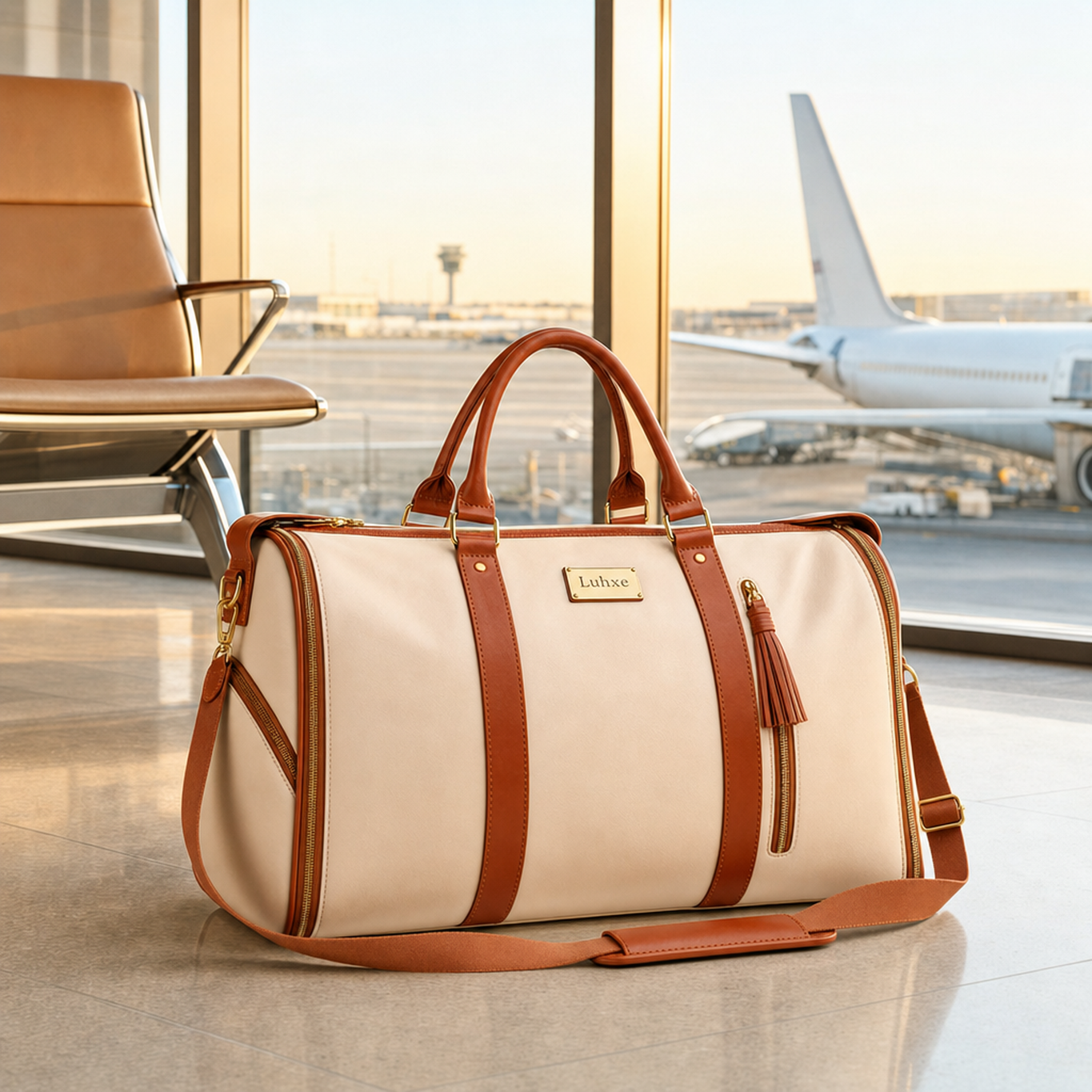
It was soft Italian leather. A long shoulder strap. Brass clasps. The size of a weekender, so it slid into every overhead bin in every aircraft we ever flew, on every airline that existed.
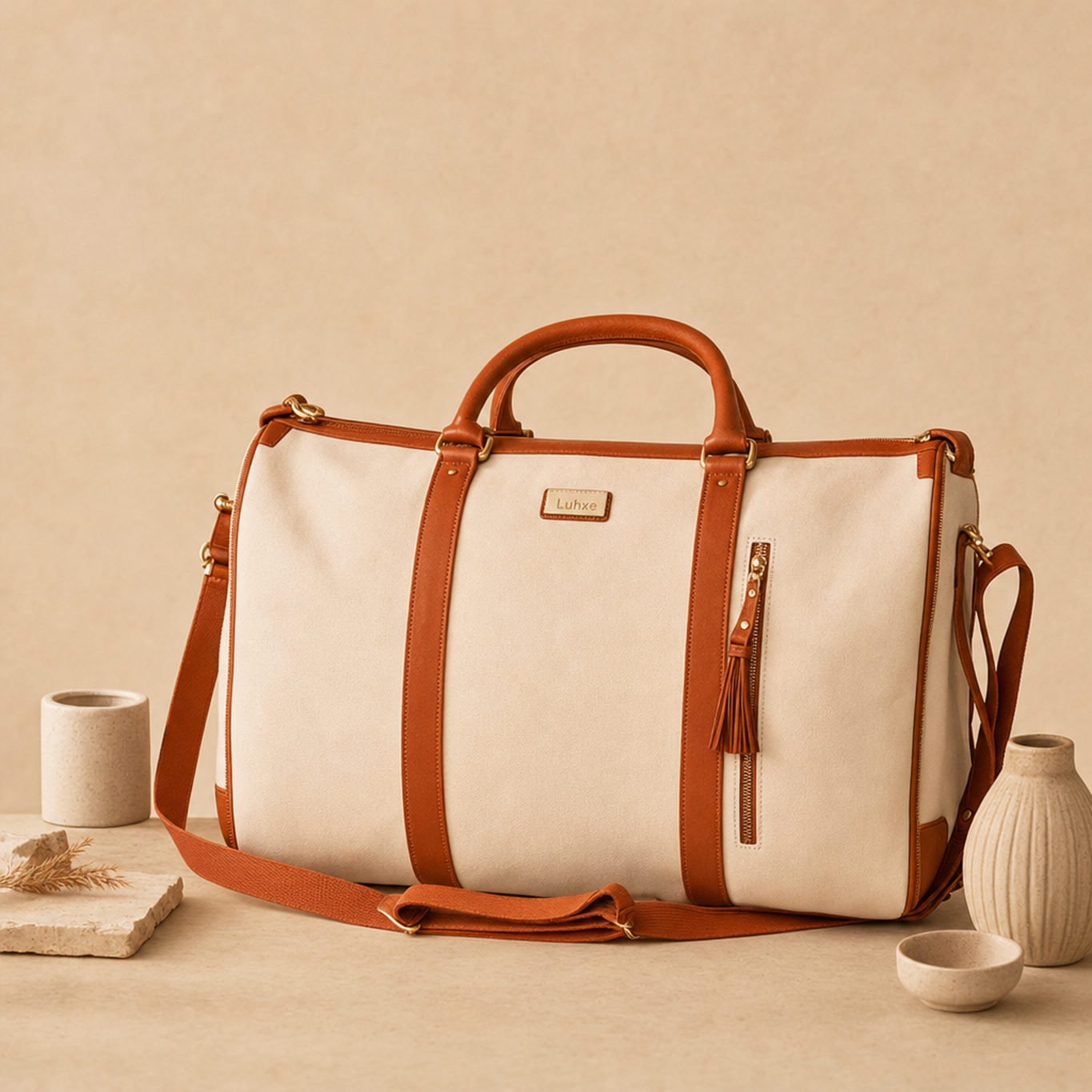
Inside, there was a compartment built into the back where the dress for your layover hung flat. Not folded. Hung. Like it was in a closet. You arrived in Paris and pulled out a silk blouse that hadn't been touched.

The main section had compression panels that let you fit ten or twelve days of clothes into something the size of a carry-on. Shoes in the side pockets. Toiletries in the front pocket.
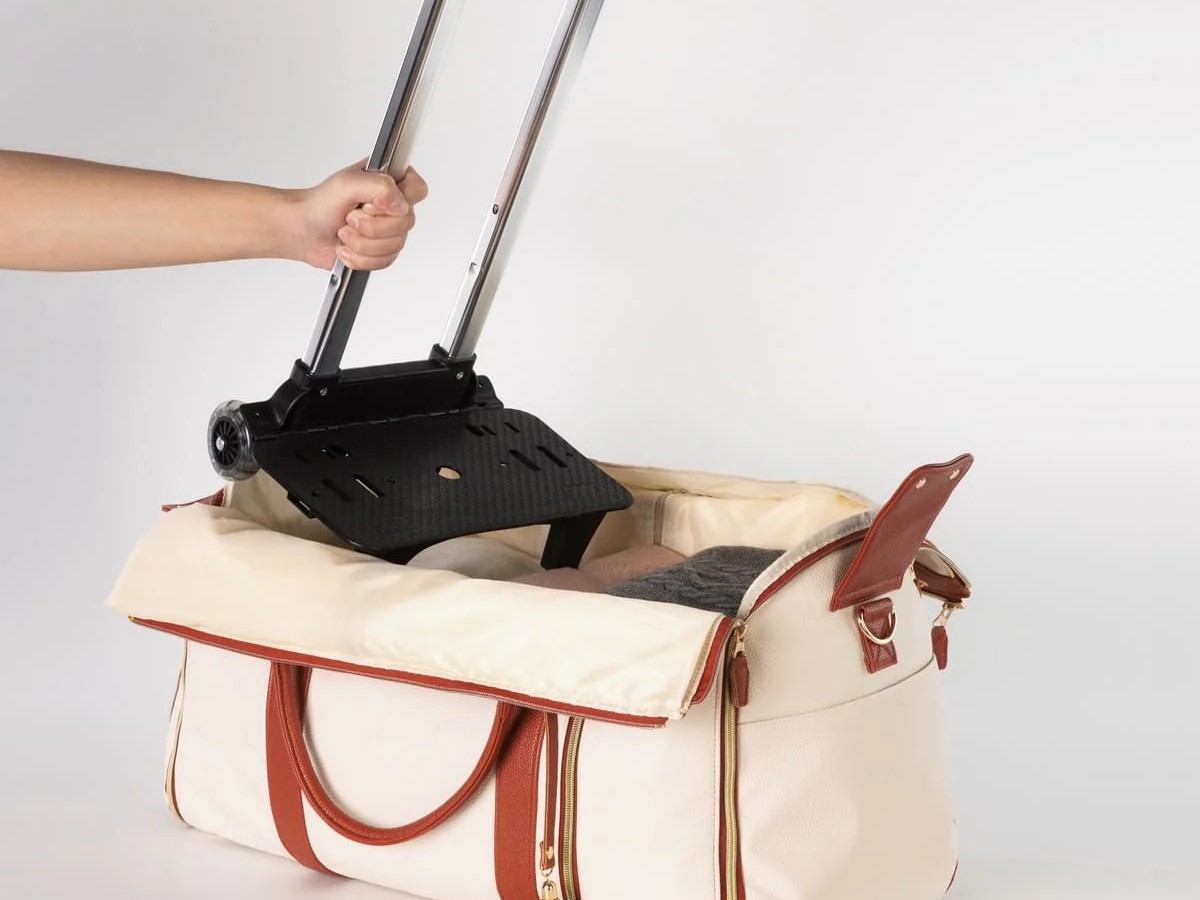
It went through every sizer at every gate without anyone stopping us. It went into every overhead without us having to ask anyone for help. We carried our own.
Every flight attendant of my generation had a version of it. We talked about it in crew lounges the way other women talked about handbags. We knew which Italian supplier made the best leather. We knew the seamstresses in New York who could repair the strap if it ever frayed.
But the bag was never sold to the public.
For fifty years, the tool that solved every single problem you've been having at airports was sitting in our crew lockers, and you didn't have access to it.
✈ Carry-on approved · ★ 100,000+ sold
I retired in October of 2018. I was 73 years old.
On my last flight, walking down the jet bridge for the last time, I cried for the first time in fifteen years.
Because I knew that the way I'd been flying for fifty years was over. For me. For everyone.
That was what I thought, anyway.
Three years into retirement, my granddaughter had her first baby in Seattle and I booked a ticket out to see her.
I was at the gate in Atlanta, waiting for them to call boarding.
A woman walked past me on her way to the jet bridge. About sixty. Not in uniform. Just a regular passenger.
She had a bag on her shoulder.
I stopped breathing.
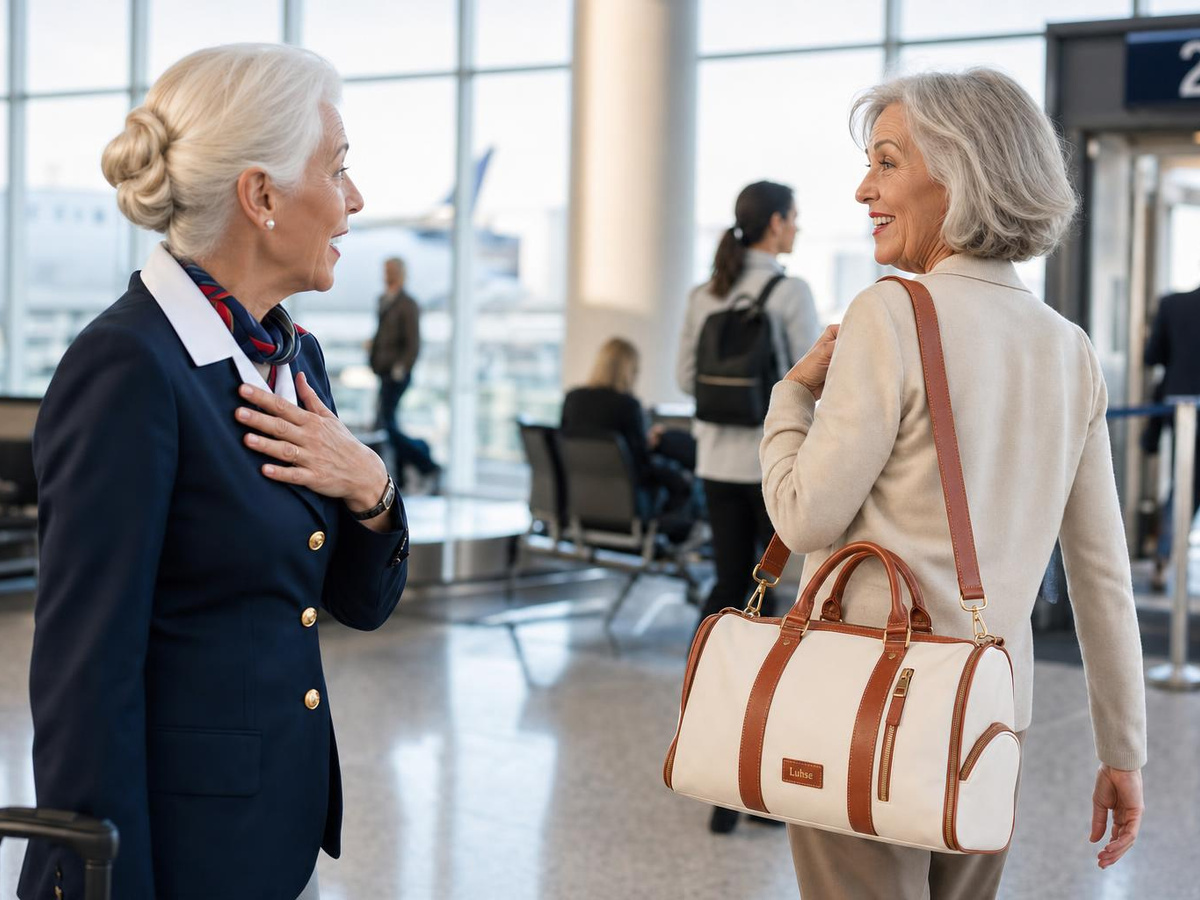
Soft Italian leather. Long shoulder strap. Brass clasps. A garment compartment built into the back, the seam stitched the same way ours had been stitched for fifty years.
I would have known that bag anywhere.
She must have seen my face because she stopped.
"Are you alright, ma'am?"
I told her. The 51 years. Pan Am. Delta. The bag we carried.
She smiled the way people smile when they're about to give you good news.
"It's called Luhxe," she said. "A woman who flew for Delta started making them a few years ago. She was about to retire and she said nobody made our bag anymore. So she had it made again. Italian leather supplier, garment compartment, the brass clasps, all of it. Built to the exact specs we used to carry."
She lifted the bag off her shoulder and let me hold it for a second.
The weight was right. The leather was right. The clasps closed with that same small bright click I'd heard ten thousand times in the galley.
"Fourteen days of clothes," she said. "Fits any overhead. Never been stopped at a gate."
She showed me the website on her phone. Small company. About 2,000 bags a year. Limited runs, sold out most of the time.
I sat at that gate for the next twenty minutes looking at the site on my own phone.
I ordered one from my hotel room in Seattle that night.
It came two weeks later, wrapped in tissue paper, with a handwritten card from the founder.
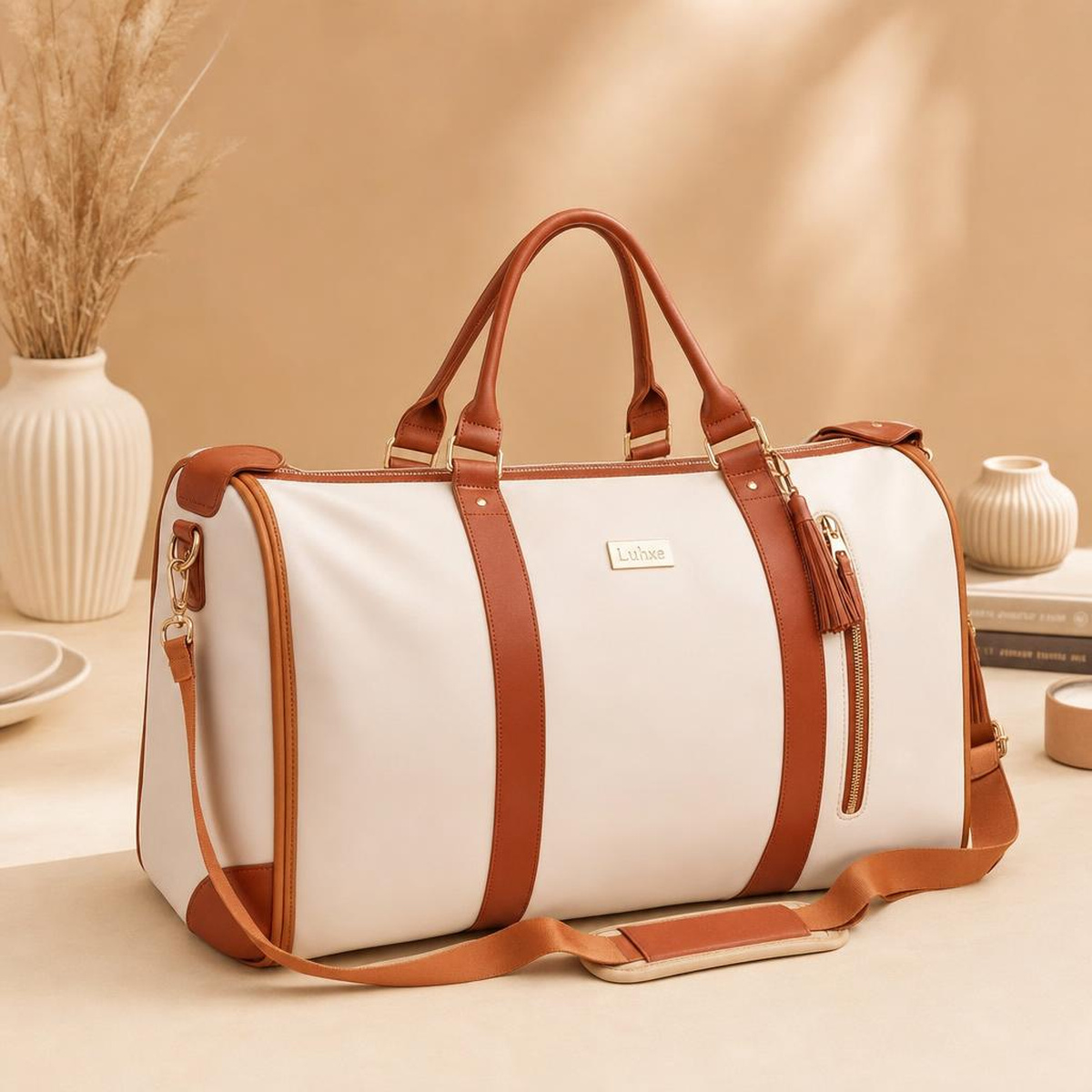
I held it in my kitchen for a long time before I put it down. The leather smelled the way good leather smells. The brass clasps caught the light from my kitchen window the way they used to catch the galley light in 1972.
My next trip was to Charleston to see Helen.

Fourteen days of clothes in one bag. The dress for our dinner hung flat in the garment compartment. My walking shoes in the side pocket.

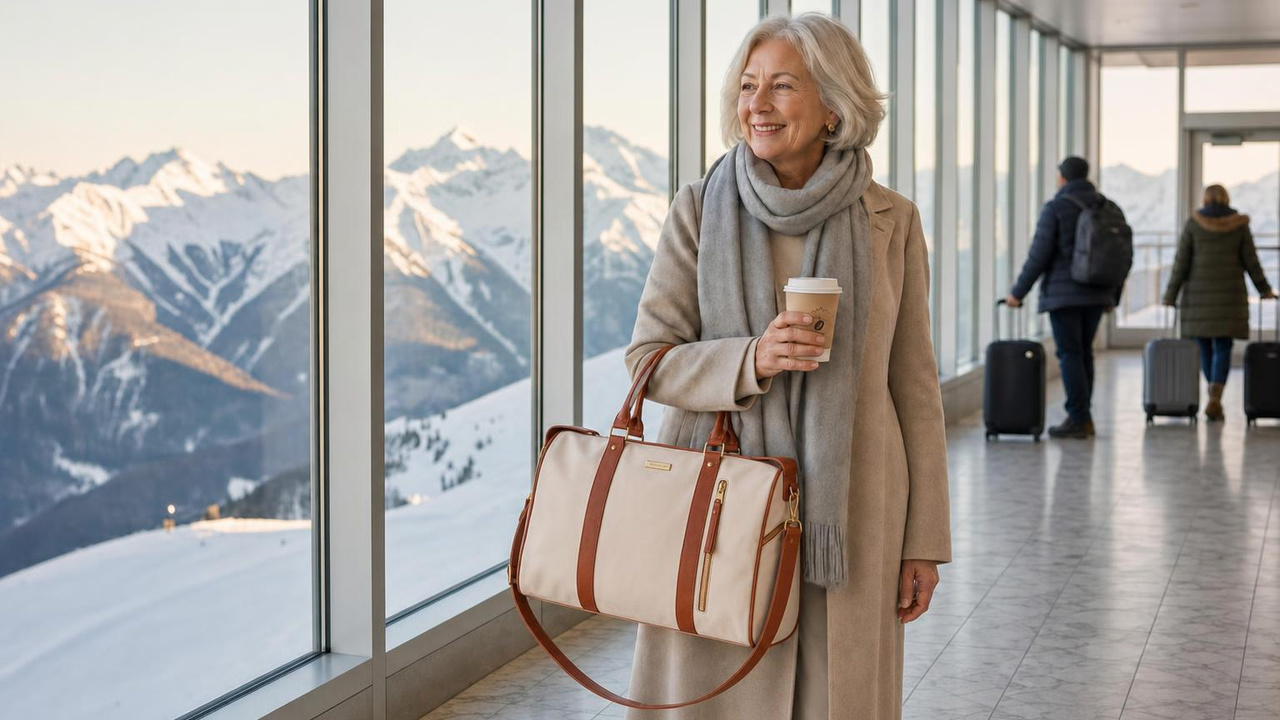
I walked through the airport with that bag on my shoulder and nobody stopped me. No agent waved me over to check a size. No counter weighing it. No fee.

I walked past the carousel without looking at it the way I used to walk past it in uniform.
For the first time in ten years of flying as a passenger, I wasn't part of the disaster I'd watched from the galley.
I was flying the way I used to fly. The way it used to be for everyone.
Soft leather · Garment compartment · Fits any overhead
The brand is called Luhxe.
The founder is an ex-flight attendant who started the company a few years ago because nobody made our bag anymore.
About 2,000 bags a year, sold only through her website. When a batch sells out, the site pauses for months.
If you're tired of paying $60 to check a bag that's going to come out the other side with your dresses wrinkled...
If you're tired of waiting forty minutes at a carousel to find out the wheel snapped off your suitcase in Atlanta...
If you're tired of standing at a counter while the agent tells you your bag is six pounds over and that's another hundred dollars before you've boarded...
You should consider it.
Not because I'm trying to sell you a bag. I don't get anything for promoting this.
But because I spent ten years watching passengers suffer in airports with the wrong tools. And you don't have to be one of them.