


Traveling with hands-free luggage allows you to move through busy terminals and city streets without the physical burden of traditional bags. By choosing wearable gear or motorized options, you can focus on your surroundings and stay organized during your commute. This guide covers the best hands-free luggage solutions and provides tips for a more efficient journey.
What is hands-free luggage and why you need it
Hands-free luggage refers to any carrying solution that allows a traveler to move without using their hands to pull, carry, or stabilize their bags. This category includes wearable backpacks with integrated features, motorized suitcases that follow the user or can be ridden, and strap systems that attach bags to the body. In 2026, the shift toward frictionless travel has made these tools essential for commuters who need to manage phones, documents, or children while on the move.
The primary benefit of these systems is the reduction of physical strain on the body. Standard carry on bags often require a constant pulling motion that can lead to shoulder and wrist fatigue. Hands free solutions redistribute weight more evenly across the torso or remove the weight from the body entirely. This allows for better posture and increased mobility in crowded environments like subways or airport terminals.
Wearable solutions with the hoodie backpack
Wearable luggage is the most common form of hands free gear. Unlike standard backpacks, these items are designed with specific commute needs in mind. A prominent example in this category is The Hoodie Backpack. Priced at $79.00, this bag provides a unique way to combine apparel and storage, ensuring that your essentials are always attached to your person while keeping your hands free for other tasks.

This type of bag is particularly useful for urban exploration or daily commutes where you may need to navigate public transportation. Because the bag remains securely on your back, you can maintain balance on moving trains or buses without needing to grip a handle. Wearable bags also offer a higher level of security in crowded areas, as the bag stays in constant contact with your body.
Using the RetraStrap for traditional carry on bags
If you already own a wheeled suitcase but want the benefits of hands-free luggage, accessories like the RetraStrap Hands-Free Luggage Strap are effective. This patented product costs $29.99 and works with most wheeled carry on bags up to 30lbs. You attach the strap to the handle of your luggage and wear it across your shoulder like a messenger bag. This allows you to pull the bag behind you simply by walking.
The RetraStrap utilizes an elastic mechanism that reduces tension on the torso while pulling. It also stabilizes the bag handle to prevent wobbling, which is a common issue when pulling heavy bags. Beyond physical comfort, this device serves as an anti theft and anti forgetting tool because the bag remains physically attached to your body at all times. This is especially helpful in 2026 for travelers who frequently multitask with their mobile devices or coffee while navigating the terminal.

Motorized carry on options for faster transit
For those who want to eliminate the effort of walking entirely, motorized options like the Modobag motorized luggage represent the high end of the market. The Modobag 2.0 is a smart, connected carry on that actually carries the traveler. It features a storage capacity of 2000 cubic inches and includes dual 5V USB ports to ensure your devices remain charged throughout your journey.
The Modobag is capable of getting you to your destination up to three times faster than walking. It includes upgraded wheels and a handlebar for steering, making it a functional vehicle for navigating large airport hubs. To comply with modern safety standards, it includes a removable battery that is 100 percent compliant with TSA, FAA, and IATA regulations. This ensures you can take the bag through security and into the cabin without issues.

Hands-free travel services for international travelers
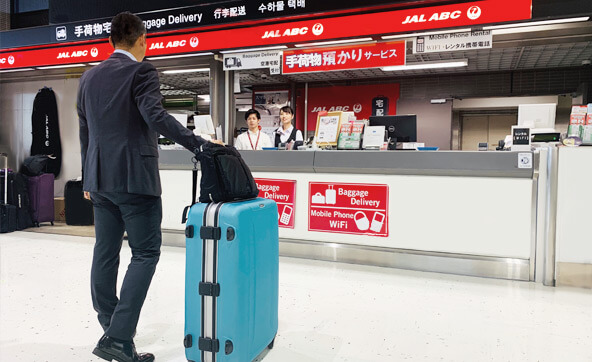
In certain regions, you can achieve a hands free experience without purchasing new gear by using specialized services. JAL ABC Hands-Free Travel Services in Japan offer a comprehensive solution for travelers. These services include luggage delivery from the airport to a specified location, such as a hotel, and luggage storage for items that are not immediately needed.
JAL ABC operates dedicated counters at major hubs including Narita International Airport, Haneda Airport, and Kansai International Airport. By using these services, you can travel between cities or explore urban areas immediately after landing without the burden of heavy suitcases. This is an ideal solution for those who prioritize flexibility and physical comfort during their stay in Japan.
Why airlines ban smart luggage and motorized bags
Airlines and regulatory bodies like the Federal Aviation Administration (FAA) have established strict rules regarding smart luggage. These restrictions were primarily introduced in 2017 due to the fire risks associated with lithium ion batteries. Lithium ion batteries can overheat and ignite, which poses a significant safety threat in the cargo hold of an aircraft where fire suppression is more difficult to manage.
For any hands-free luggage that includes a battery, the battery must be removable. If you intend to check the bag, the battery must be removed and carried into the cabin with you. Motorized suitcases are also frequently scrutinized and may be added to dangerous items lists if they do not meet specific battery and size requirements. Always verify the battery specifications of your gear to ensure it meets International Air Transport Association (IATA) guidelines before heading to the airport.
Reasons to avoid using a black suitcase
While black is a popular color for luggage due to its professional appearance, security experts often recommend avoiding it. Black, navy, and grey suitcases are the most common colors in any airport, making them difficult to identify if lost or stolen. In fact, black is the most commonly lost suitcase color at airports globally. Using a common color increases the likelihood that another traveler will accidentally pick up your bag at the luggage carousel.
Choosing uniquely colored gear or adding distinctive identifiers can significantly improve your security. If you prefer dark tones, look for a charcoal hued bag or one with unique design elements. Brightly colored luggage is easier for airport staff to spot in a lost baggage warehouse and much harder for a thief to walk away with unnoticed. If you must use a black bag, consider adding a brightly colored strap or a unique luggage tag to differentiate it from the hundreds of identical bags in the terminal.
The type of suitcase flight attendants recommend avoiding
Flight attendants often advise against using hard shell suitcases that lack flexibility or those with low quality wheels. Hard shell bags can be difficult to fit into overhead bins if they are packed to capacity, whereas soft sided bags can often be compressed slightly to accommodate tight spaces. Furthermore, flight attendants recommend avoiding bags that are excessively heavy before they are even packed, as this contributes to physical strain and may exceed weight limits for cabin storage.
Durability is the primary concern for airline crew members. They frequently see bags with broken zippers or wheels that fail under the stress of rapid transit. Investing in gear with high quality hardware and reinforced stitching ensures that your hands free luggage can withstand the rigors of frequent commuting without requiring constant repairs. You can find options built for these conditions in the urban commuter bag collection at Luhxe.
Finding airlines with free hand luggage allowances
Understanding which airlines offer free hand luggage is vital for budgeting your commute. Major full service carriers like Delta Air Lines, United Airlines, and American Airlines typically allow one carry on bag and one personal item for free in standard economy classes. However, basic economy fares on these same airlines often restrict you to a personal item only, charging a fee for anything that needs to go into the overhead bin.
Budget carriers such as Spirit Airlines and Frontier Airlines generally charge for all hand luggage that does not fit under the seat in front of you. In 2026, many international carriers have also moved toward weight based systems for hand luggage rather than just size. Always check the specific baggage policy of your airline at the time of booking to avoid unexpected fees at the gate. Using a lightweight, wearable solution can often help you stay within these weight limits more easily than a heavy wheeled suitcase.
Biomechanics of carrying luggage while commuting
The science of how you carry your gear is just as important as the gear itself. When you pull a traditional suitcase, your body is often in an asymmetrical position, with one arm extended behind you and your torso slightly twisted. This repetitive motion can lead to muscle imbalances and chronic pain in the lower back and shoulders. Hands-free luggage solutions aim to bring the center of gravity closer to your natural midline.
Backpacks that distribute weight across both shoulders are far superior for spinal health compared to single shoulder bags. For those using motorized or strap based systems, the goal is to keep the body in a neutral, forward facing alignment while walking. This reduces the metabolic cost of travel, meaning you arrive at your destination with more energy. Proper weight distribution also improves your balance, which is critical when navigating stairs or uneven city sidewalks during a commute.
Optimizing your airport transit workflow
To truly master the hands free commute, you must optimize your entire workflow from the curb to the gate. Start by using digital boarding passes on your smartwatch or phone to eliminate the need for paper documents. Organize your bags so that items requiring security screening, such as electronics or liquids, are easily accessible without needing to unpack the entire bag. This is where bags with specialized compartments become invaluable.
When you reach the security checkpoint, a hands free setup allows you to move through the line more efficiently. You can place your bag in the bin and retrieve your items without struggling with multiple loose pieces of luggage. Once through security, a motorized bag or a wearable backpack allows you to navigate the terminal at a higher speed, ensuring you reach your gate with time to spare. This systematic approach reduces the psychological stress of travel and makes the entire process feel more intuitive.
Maintaining your hands-free luggage for longevity
High performance travel gear requires regular maintenance to stay functional. For motorized bags, ensure that the battery is charged regularly and stored in a cool, dry place. Check the wheels of any rolling bag for debris or hair that can clog the bearings and increase resistance. For wearable fabric bags, spot cleaning with mild soap and water can prevent the buildup of city grime and salt that can degrade the material over time.
Inspect all straps and attachment points for signs of wear or fraying. The integrity of these components is what allows for a hands free experience, so any failure could result in a dropped or damaged bag. In 2026, many premium brands offer replacement parts for wheels and handles, allowing you to extend the life of your investment rather than replacing the entire bag. By taking these small steps, you can ensure that your commute remains stress free for many years to reach.